

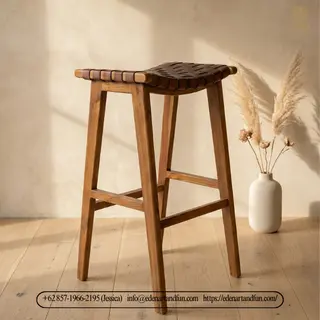
Leather paired with teak wood is one of the more popular combinations in Indonesia’s teak furniture industry, and it’s easy to see why. Genuine leather brings a soft, refined look, while teak adds the weight and durability the piece needs to last for decades rather than years. Together they make furniture that feels like a real investment which is exactly why it’s worth learning how to care for both materials properly, rather than treating them the way you would a regular sofa.
6 Practical Leather Furniture Care Tips
Here’s a rundown of habits that actually make a difference, based on how leather and teak behave over time rather than generic cleaning advice.
1. Dust and Clean Regularly
Dust settles into the natural creases of leather more than people expect, and over a few weeks it dulls what should be a rich, glossy surface. A soft microfiber cloth wiped over the leather once or twice a week handles most of it. For seams, corners, and other spots a cloth can’t reach, a vacuum with a soft brush attachment works well just skip anything with stiff bristles, since those can leave fine scratches that show up under direct light.
2. Keep It Out of Direct Sunlight
Sunlight is leather’s biggest enemy. Hours of UV exposure each day will fade the color and dry out the surface until it starts to crack, and teak isn’t entirely immune eitherit can shift in tone with constant sun exposure, even though it handles it far better than leather does. If the furniture can’t be moved away from a sunny window, curtains or blinds during peak hours go a long way toward slowing that down.
3. Wipe Up Spills Right Away
A spill on leather isn’t urgent the moment it happens, but it becomes one fast. Liquid that sits too long starts to soak in, and that’s when staining gets hard to reverse. Blot it don’t rub with a clean, dry cloth as soon as you notice it; rubbing tends to spread the liquid rather than lift it. If a stain has already set in, a leather-specific cleaner will do more good than household cleaning products, which can strip the leather’s finish.
4. Condition It Every Few Months
Leather needs the same kind of upkeep wood does, just in a different form. Without it, the material loses moisture and starts to stiffen, eventually cracking along the seams where it flexes the most. A good leather conditioner applied every 6 to 12 months keeps it supple — how often depends on how much the furniture gets used and how dry the room tends to be. It’s worth testing any new product on a hidden patch first, just to make sure the color and finish react the way you expect.
5. Keep Sharp Objects and Claws Away
It doesn’t take much to leave a permanent mark on leather a belt buckle, keys left on a cushion, a cat that likes to knead. Where teak armrests or side tables are part of the piece, a felt pad or coaster under heavier objects protects the wood from scuffs the same way it protects the leather from scratches.
6. Watch the Humidity in the Room
Both leather and teak are sensitive to how dry or damp the air around them is, just in opposite directions. Too little humidity dries leather out and speeds up cracking; too much invites mold, especially in a tropical climate. Aiming for somewhere between 40% and 60% humidity keeps both materials comfortable. In particularly humid rooms, a bit of airflow and some distance from damp walls makes a noticeable difference over time.
Why It’s Worth the Effort
Furniture like this isn’t cheap to replace, and it shouldn’t need to be. Leather that’s properly cleaned and conditioned stays soft and rich-looking for years rather than months, and a teak frame that’s kept dry and out of harsh sun will outlast almost anything else in the room. None of these habits take much time on their own a few minutes of dusting, an occasional conditioning session, a bit of awareness about where the furniture sits in the house. But added up over the years, that small effort is what separates a piece